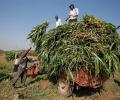
India achieved record foodgrains production this year but the withdrawal of three agri-reform laws and spike in cooking oil prices cast a shadow on the country's resilient agriculture sector that is on course for better harvest in 2022 despite pandemic blues. While soaring production of foodgrains that also helped the government provide free additional rations for COVID-hit poor families for many months together came as a relief, the passing year will be remembered for the long drawn farmers' protest at Delhi borders against the three laws and subsequent repeal of the legislations. The Indian agriculture sector, which was among the few segments that remained robust amid the pandemic gales, is expected to register a growth rate of 3.5 per cent in the current financial year ending March 2022.
Kiran Vissa, co-convenor of National Alliance for Sustainable Agriculture, said that amendments to the EC Act have nothing to do with farmers' welfare but instead meant to please big players and agriculture companies. This is because small and marginal farmers don't have the storage capacity to attract provisions of the EC Act.
'All imaginary figures are pushed by government bureaucrats.' 'They never showed that the production of wheat was less this time.'

Sensex, Nifty end lower on global concerns.

The dairy major is transforming into a full-fledged F&B and fast moving consumer goods (FMCG) player, reports Vinay Umarji.

The medical devices, which have been in high demand during the Covid-19 pandemic, will now see a drop in prices, as the earlier margins were up to 709 per cent for some of these products.

Passenger vehicle wholesales in India slipped to a 10-year low in the April-December this fiscal, and the industry will have to work hard to regain better volumes and business health, industry body SIAM said on Thursday.
Over all trends indicate prices of pulses and onions have declined, and prices of all other commodities have remained stable across the country.

It means more tickets sold and therefore more revenues and hastens the recovery of the devastated-by-the-pandemic film business.

Most key rabi-producing states of north India, such as Madhya Pradesh and Rajasthan, have staggered their procurement to enable farmers to come in batches, so that there is no overcrowding. The Centre has also set up a call centre to coordinate the inter-state movement of farm commodities.

The RBI said recently that the upsurge in inflation in April was led by food and commodity prices.
The government on Wednesday raised the minimum support price (MSP) of paddy marginally by Rs 72 per quintal to Rs 1,940 per quintal for the 2021-22 crop year, while the rates of pulses, oilseeds and cereals were hiked substantially. Among the commercial crops, the MSP of cotton was increased by Rs 211 per quintal to Rs 5,726 for medium staple variety, and by Rs 200 per quintal to Rs 6,025 for long-staple variety of cotton for the 2021-22 crop year (July-June). The decision taken by the Cabinet headed by Prime Minister Narendra Modi will help farmers take a call on which kharif (summer) crop to grow as sowing picks with the spread of the Southwest monsoon in the coming weeks.
With palm oil having 55 per cent share in total edible oil imports, the National Mission on Edible Oil-Oil Palm (NMEO-OP) would ensure that farmers get all facilities, from quality seeds to technology to promote cultivation of palm and other oil seeds, he said. Modi made this announcement after virtually releasing the ninth installment of Rs 19,500 crore to 9.75 crore beneficiary farmers under the government's flagship scheme PM-KISAN.

The NITI Aayog, in a concept note floated a few months back, had suggested three models of procurement but the Centre, at least for the time being, has decided to rely on existing PSS schemes along with giving states the option of choosing Bhawantar Bhugtan for oilseeds.

Under Pradhan Mantri Kisan Samman Nidhi (PM-KISAN) scheme, the Centre provides an annual financial benefit of Rs 6,000 to eligible beneficiary farmers in three equal four-monthly installments of Rs 2,000 each.

Sensex climbs higher on favourable global cues.

The processor is just 5 per cent of the overall cost of a computing device.

Four Canadian ministers of Indian origin are traveling with Prime Minister Trudeau.
Retail inflation during the first month of the current fiscal stood at 2.9 per cent, down from 4.6 per cent a year ago. Food inflation based on Consumer Food Price Index declined to a low of 0.1 per cent during the financial year 2018-19, the survey said.

When we are unwell, we consult a doctor, take a prescription, and then buy medicines from a chemist. In finance, too, it is best to keep investment advice and product purchase separate, suggests Bindisha Sarang.

The country had imported 5.5 million tonnes of pulses last year.
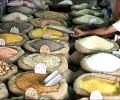
The Centre had asked the state governments to meet the millers.

The Centre will utilise huge network of post offices across the country to sell subsidised pulses, mainly tur, urad and chana, to ensure availability in the ongoing festival season.
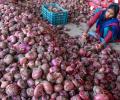
The Reserve Bank of India on Thursday raised its inflation projection to 5.1-4.7 per cent for the second half of the current fiscal on the back of spike in prices of vegetables such as onion and tomatoes.

The minister emphasised that India will play its due role in advancing global food security and it will do so in a manner in which it upholds equity, displays compassion, and promotes social justice.
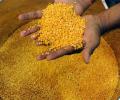
At an average national price of Rs 90 a kg in the retail market, it shows a jump by 20% in the last two months.

With a string of deals with telecom service providers, DTH operators and Bollywood stars, Netflix goes all out to protect its turf in India and fend off competition, says Viveat Pinto.

Three key agriculture Bills, approved by the Lok Sabha, are facing staunch opposition from within the ruling coalition with senior minister Harsmirat Kaur Badal resigning in protest and farmers hitting the street.
Costlier vegetables slowly pushed retail inflation, which had remained well within the Reserve Bank's comfortable level of 4 per cent during most part of 2019, peaked to more than three-year high of 5.54 per cent in November.

The index had risen over 585 points in the previous three sessions.

The rising price of pulses has become a hot issue during the Bihar assembly polls.

India's industrial production grew by 1 per cent in December, official data showed on Friday. According to the Index of Industrial Production (IIP) data, the manufacturing sector output grew by 1.6 per cent in December 2020.
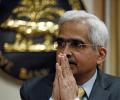
Reserve Bank Governor Shaktikanta Das on Wednesday ruled out upside risks to the 5.3 per cent inflation forecast for the current fiscal, saying the recent cut in excise duty on diesel and petrol as well as better management of supply-side issues on the food front have contained inflationary expectations. These measures are significantly positive for inflation management, he said. After months of calls for reducing taxes on fuels, the government, last week, cut the excise duty on diesel and petrol by Rs 10 and Rs 5 per litre, respectively.

Karnataka, Andhra Pradesh, Tamil Nadu, Rajasthan, Maharashtra, Bihar, Uttar Pradesh, Madhya Pradesh, and Gujarat account for 85 per cent of India's maize production.

Modi government is pushing GM food crops without adequate safety assessment and transparency, claim activists.

The Tata group firm has enhanced its product portfolio through "targeted acquisitions" as it aspires to be a formidable player in the FMCG category, said Chandrasekaran, who is also the chairman of Tata Sons. Besides, it has stepped up the pace of innovation across markets in line with consumer trends such as health and wellness and convenience, he said in his message to shareholders in the latest annual report of TCPL.

'If the money we spend on importing pulses reach our farmers, there won't be any suicides'

Jio-BP, the fuels and mobility joint venture between Reliance Industries and UK's BP, on Thursday announced a partnership with BluSmart - India's first and largest all-electric ride-hailing platform - to set up a network of commercial large-scale EV charging stations. As part of the partnership, Jio-BP will set up these stations for passenger electric vehicles and fleets across the country, the company said in a statement. "Through this partnership, both companies will collaborate in planning, development and operation of EV charging infrastructure, at suitable locations across cities where BluSmart operates," it said.

Professionals with sharp technical skills and knowledge of emerging markets will continue to be in demand, says Nikhil Barshikar, founder and CEO of Imarticus Learning, a tech learning and training company.
